Home › Common Problems › Bowing Foundation Walls
Bowing Foundation Walls
in Ann Arbor, MI
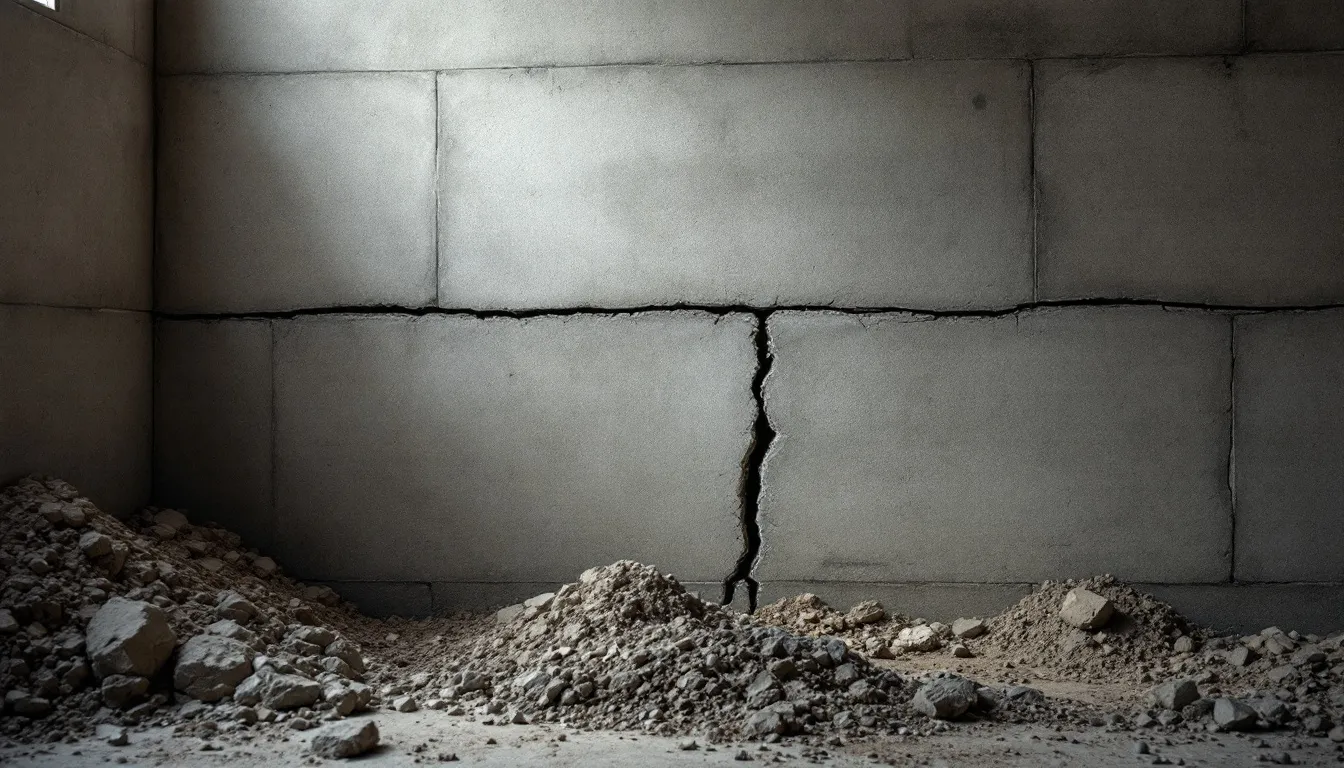
A bowing foundation wall means the concrete or block is being pushed inward by the soil outside it. The heavy clay soil common throughout Ann Arbor holds water and swells when it freezes, then shrinks when it thaws. Do nothing and the wall can crack through, let water in, and eventually fail entirely.
Ann Arbor Concrete Repair Pros helps Ann Arbor, MI homeowners fix bowing foundation walls — call for a free inspection.
Quick Answer
Bowing foundation walls happen when heavy clay soil outside your basement pushes inward over time. Ann Arbor gets enough freeze-thaw cycles each winter to make that soil expand and contract repeatedly. The fix is usually carbon fiber straps bolted to the wall or steel beams installed floor to ceiling to stop the movement. Call for an inspection now if the bow is more than 2 inches.
Telltale Signs
Warning Signs to Watch For
- The basement wall curves inward noticeably when you sight down its length
- Horizontal cracks running across the middle third of the wall
- Gaps opening between the wall and the floor or sill above
- Stair-step cracks along the mortar joints in a block wall
- Doors or windows in the basement sticking or no longer squaring up
Root Causes
What Causes Bowing Foundation Walls?
Clay soil lateral pressure
The heavy clay soil throughout much of Ann Arbor absorbs rainwater and swells. That swelling pushes steadily against the outside of your foundation wall, and block or poured concrete walls start to bow inward over years of repeated pressure.
The Fix
Carbon Fiber Strap Installation
Carbon fiber straps are anchored to the floor and the rim joist above the wall. The rim joist is the horizontal lumber that sits on top of your foundation. The straps hold the wall from moving any further inward without digging outside.
Freeze-thaw soil expansion
Ann Arbor averages around 135 days per year where the temperature crosses below freezing. Each freeze-thaw cycle causes the wet clay soil to expand outward and then press back against the wall, adding stress every single winter.
The Fix
Steel Wall Beam Bracing
Steel I-beams are installed from the basement floor to the floor joist above at regular intervals along the bowed wall. The floor joist is the framing that holds up your first floor. The beams physically brace the wall and can be gradually tightened over time to push it back.
Self-Diagnosis
Which Cause Applies to You?
Check the signs you're observing to narrow down the likely root cause before your inspection.
| What You're Seeing | Clay soil lateral pressure | Freeze-thaw soil expansion |
|---|---|---|
| Long horizontal crack at mid-wall height | ||
| Wall bows worse on the north or unshaded side | ||
| Bowing is worse after a wet spring | ||
| Block wall shows stair-step cracking at corners | ||
| Wall movement seems to get worse each winter |
Free Quote
Get a free quote in Ann Arbor
No obligation — tell us what's going on and we'll text you back shortly.
Other Problems
Services That Fix This
Bowing Foundation Walls Near You
Also Helpful