Home › Common Problems › Concrete Driveway Cracking
Concrete Driveway Cracking
in Ann Arbor, MI
Concrete driveways in Ann Arbor take a beating from winters that drop well below freezing and road salt that works its way into the surface. The freeze-thaw cycle, combined with the clay soil that shifts as it gets wet and dries out, causes slabs to crack, heave, and sink. Ignored cracks let more water in, and each winter makes the damage worse.
Ann Arbor Concrete Repair Pros helps Ann Arbor, MI homeowners fix concrete driveway cracking — call for a free inspection.
Quick Answer
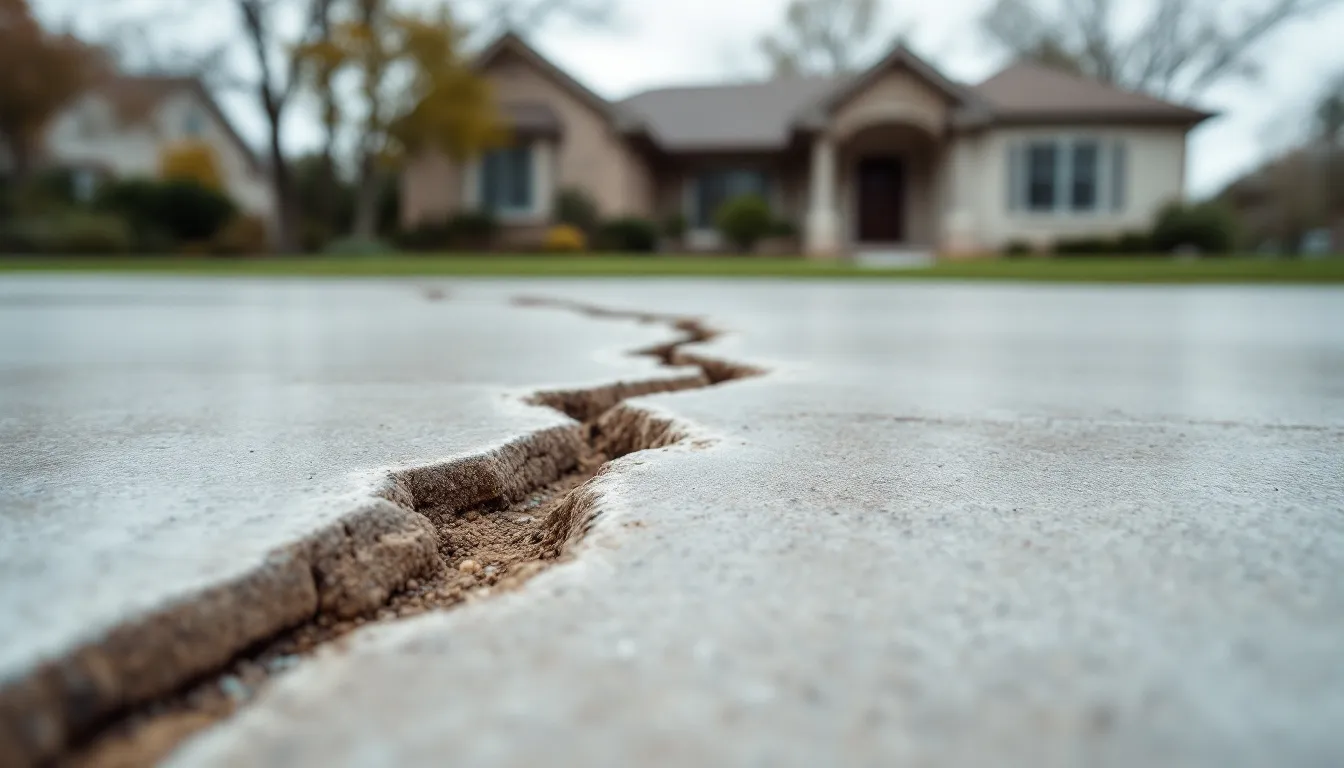
Driveway cracks in Ann Arbor are almost always caused by the freeze-thaw cycle working on water that has already gotten under the slab. Water seeps into the concrete or under it, freezes, expands, and breaks the slab apart from below. Small cracks can be routed and sealed. Large broken sections usually need to be replaced. Don't wait until spring if water is pooling near your foundation.
Telltale Signs
Warning Signs to Watch For
- Straight or branching cracks running across the driveway surface
- One slab section higher than the next, creating a trip edge
- Pitting or flaking on the surface, especially near the street
- Cracks wider than a quarter inch that you can see into
- Water pooling in low spots where the slab has sunk
- Chunks of concrete breaking loose at the edges
Root Causes
What Causes Concrete Driveway Cracking?
Freeze-thaw slab heaving
Water gets into small surface cracks or under the slab through the edges. When temperatures drop below freezing, that water expands about 9 percent in volume and forces the concrete upward or apart. Ann Arbor regularly sees 30 or more freeze-thaw cycles in a single winter season.
The Fix
Crack Routing and Sealing
The crack is cut wider with a saw so the edges are clean, then filled with a flexible polyurethane sealant that moves with the slab. This keeps water out so freeze-thaw cycles stop making the crack bigger.
Clay soil settlement under slab
The clay soil under driveways in neighborhoods like Burns Park and the Old West Side shrinks when it dries out in summer and swells when it gets wet. That movement leaves voids under the slab, and the concrete cracks and sinks where it loses support.
The Fix
Slab Lifting and Void Filling
Polyurethane foam is injected through small drilled holes to fill voids under the slab and lift it back to level. It cures in minutes and supports the concrete without adding significant weight.
Road salt surface damage
Road salt and the deicer products used heavily on Ann Arbor streets pull moisture into concrete and cause the surface layer to flake off. This is called scaling. Once the surface is open, water and salt get deeper and the damage accelerates each winter.
The Fix
Concrete Surface Resurfacing
A bonding layer is applied and then a fresh layer of concrete mix is troweled over the sound base slab. A penetrating sealer applied afterward slows future salt and water infiltration.
Self-Diagnosis
Which Cause Applies to You?
Check the signs you're observing to narrow down the likely root cause before your inspection.
| What You're Seeing | Freeze-thaw slab heaving | Clay soil settlement under slab | Road salt surface damage |
|---|---|---|---|
| Surface is pitting and flaking off in thin layers | |||
| One slab panel is higher than the one next to it | |||
| Cracks are widest in late winter or early spring | |||
| Slab rocks when you step on the middle of it | |||
| Damage is worst near the street end of the driveway | |||
| Cracks run diagonally across slab corners |
Free Quote
Get a free quote in Ann Arbor
No obligation — tell us what's going on and we'll text you back shortly.
Other Problems
Services That Fix This
Concrete Driveway Cracking Near You
Also Helpful