Home › Common Problems › Concrete Retaining Wall Failure
Concrete Retaining Wall Failure
in Ann Arbor, MI
Retaining walls hold back soil on sloped yards throughout Ann Arbor, and a lot of them are 30 to 50 years old and were not built with enough drainage behind them. The heavy clay soil here holds water for days after a storm and that water turns into pressure against the back of the wall. Cracks, leaning, and joint separation are all signs the wall is losing that fight.
Ann Arbor Concrete Repair Pros helps Ann Arbor, MI homeowners fix concrete retaining wall failure — call for a free inspection.
Quick Answer
Concrete retaining walls in Ann Arbor fail mostly because water builds up in the soil behind them and the pressure becomes more than the wall was built to handle. Good drainage behind the wall is the real fix, not just patching the concrete. A wall leaning more than 1 inch out of plumb needs to be looked at right away because once it starts to go it goes fast.
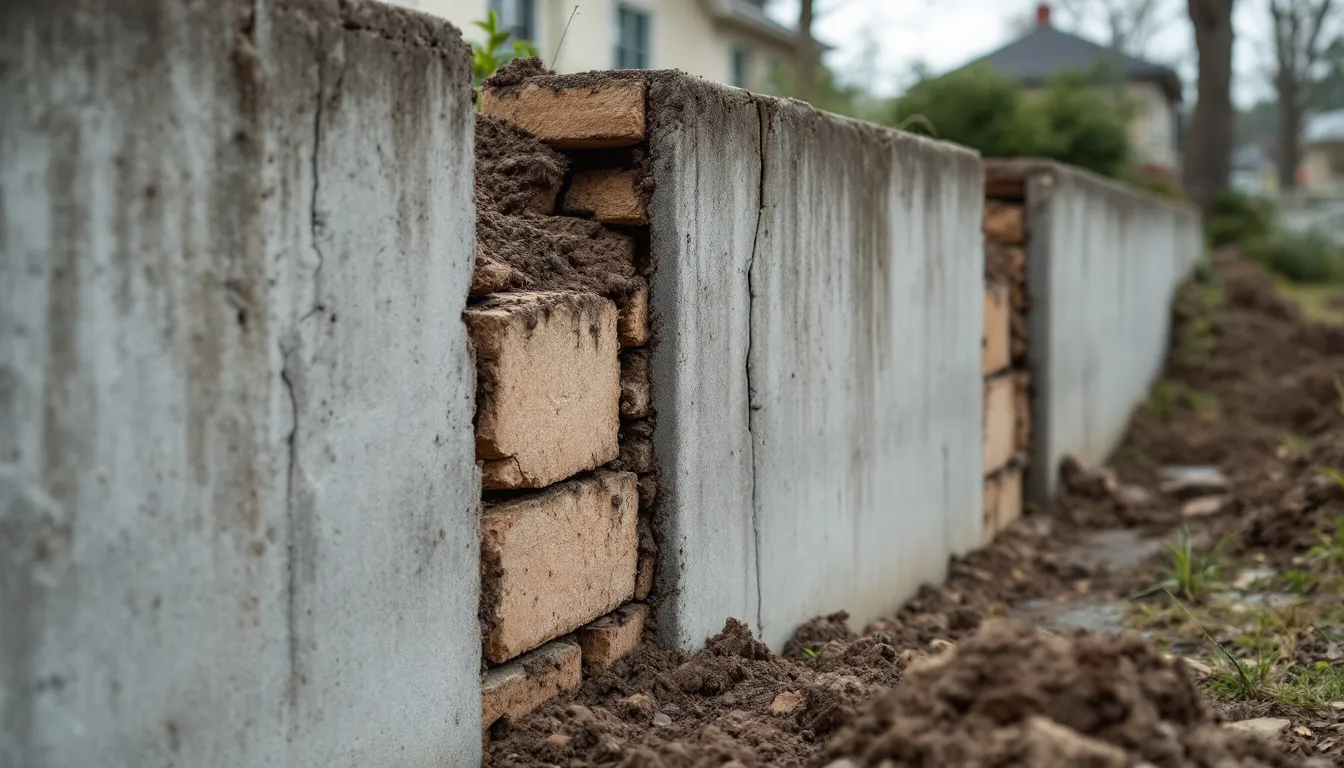
Telltale Signs
Warning Signs to Watch For
- Wall is visibly leaning away from the hillside it holds back
- Horizontal cracks running across the face of the wall
- Vertical cracks at panel joints that are growing wider
- Soil or sand washing out from behind the wall through cracks
- Bulging or bowing outward on one section of the wall
Root Causes
What Causes Concrete Retaining Wall Failure?
Hydrostatic pressure buildup
When there are no drainage pipes or gravel backfill behind a retaining wall, rainwater saturates the clay soil and has nowhere to go. That trapped water creates outward pressure on the wall that can exceed what the concrete was designed to hold.
The Fix
Wall Drainage System Installation
Weep holes are drilled through the wall base to let trapped water escape. If the wall is being rebuilt, a gravel drainage layer and perforated pipe are installed behind it before the soil is replaced.
Inadequate original footing depth
Many retaining walls in Ann Arbor back yards were built by homeowners or small contractors without footings deep enough to resist the soil load and frost heave together. The frost line here is 42 inches. A wall with a shallow footing tips outward a little more each winter until it fails.
The Fix
Wall Rebuild with Proper Footing
The existing wall is removed and a new footing is poured below frost depth. The wall is rebuilt with proper thickness for the height of soil it holds, and drainage is built in from the start.
Root damage and joint opening
Tree and shrub roots grow into cracks and joints in older concrete retaining walls. As roots grow thicker each year, they pry the joints open and weaken the structure. This is common in older Ann Arbor neighborhoods with large mature trees planted near property lines.
The Fix
Joint Repair and Root Removal
Roots are cut back and the joints are cleaned out and packed with a hydraulic cement or epoxy mortar. If roots are from a large tree that cannot be removed, the wall section may need to be rebuilt in a material the roots cannot penetrate as easily.
Self-Diagnosis
Which Cause Applies to You?
Check the signs you're observing to narrow down the likely root cause before your inspection.
| What You're Seeing | Hydrostatic pressure buildup | Inadequate original footing depth | Root damage and joint opening |
|---|---|---|---|
| Wall leans outward and gets worse after wet weather | |||
| Wall leans but moves slightly back in dry summers | |||
| Joints between sections are cracked open and widening | |||
| Water pours out through cracks after heavy rain | |||
| Visible roots growing into or along wall surface | |||
| Wall tips outward more each spring than the previous year |
Free Quote
Get a free quote in Ann Arbor
No obligation — tell us what's going on and we'll text you back shortly.
Other Problems
Services That Fix This
Concrete Retaining Wall Failure Near You
Also Helpful